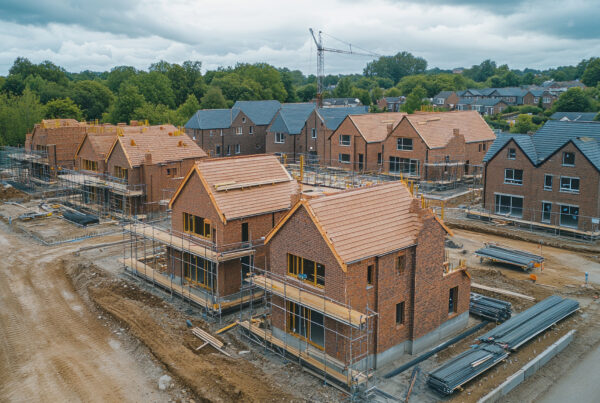

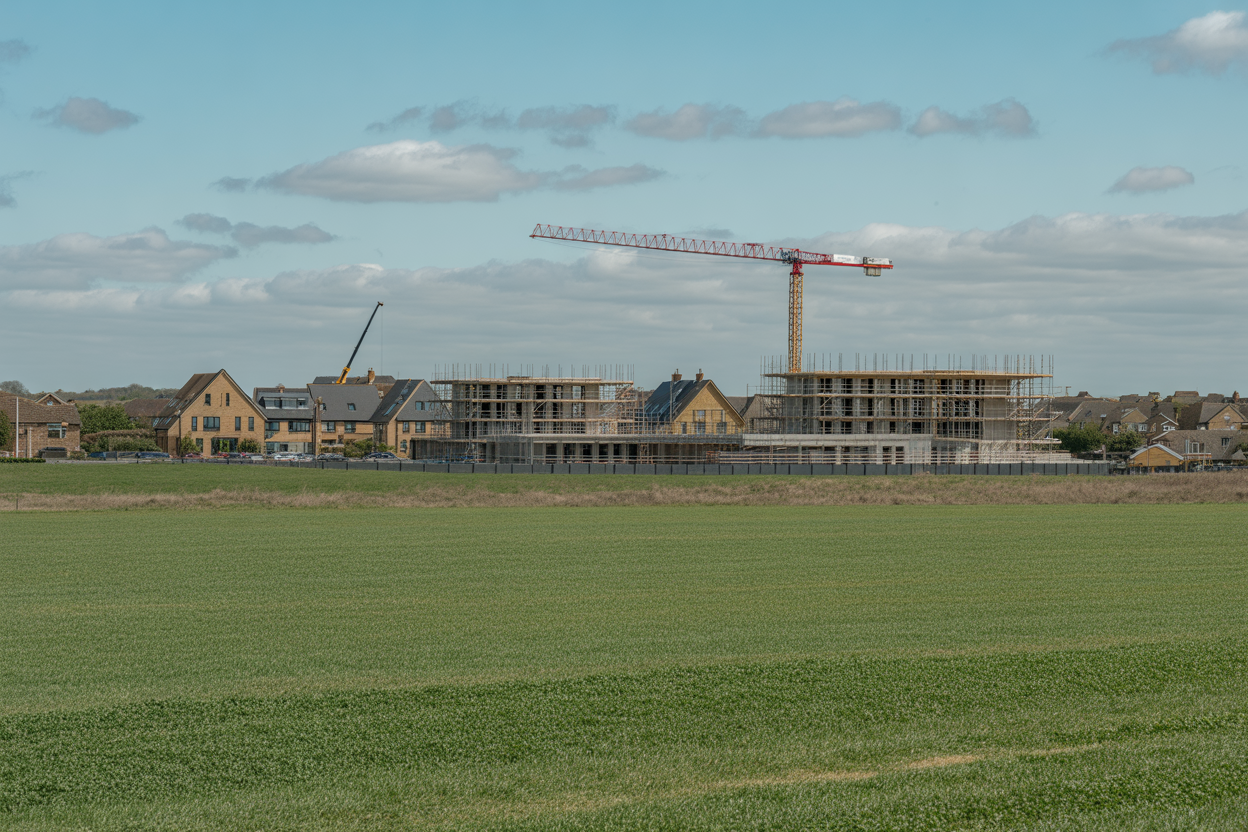

Grey belt land has quickly become one of the most talked-about opportunities in development, and with good reason. It offers a pragmatic way to unlock sites that technically sit within the Green Belt but do not meaningfully perform its core functions.
Former industrial land, constrained plots surrounded by infrastructure, or sites with limited landscape or heritage value are now being looked at differently.
That shift matters. It moves planning away from rigid categorisation and towards a more site-specific assessment of impact. For housing delivery, that is a welcome change. But it also introduces a quieter, less visible risk: judgement replacing certainty.

When Policy Becomes Interpretation
Grey belt decisions rarely hinge on absolutes. Instead, they turn on finely balanced assessments. How much harm is “significant”? When does landscape impact outweigh housing need? Can heritage concerns be mitigated rather than avoided altogether?
These are not binary questions, and that is precisely where risk creeps in. Permissions granted on grey belt sites are often lawful, well-reasoned and policy-aligned — but they are also more exposed to challenge because reasonable people can disagree with the judgement applied.
In practice, this means that a grey belt consent can feel secure while still being fragile.
The Judicial Review Window Matters More on Grey Belt
Local opposition to grey belt schemes is common. The language of Green Belt still carries emotional and political weight, even where policy has shifted. As a result, grey belt permissions tend to attract closer scrutiny, particularly in the immediate aftermath of a decision.
This is where the judicial review window becomes commercially significant. A challenge does not need to succeed to have an impact. The mere existence of proceedings can slow transactions, delay funding drawdowns and place development programmes under strain. For schemes that are already finely balanced, time lost here can be disproportionately damaging.
At this stage, risk is no longer theoretical. It is operational.
Complexity Does Not End at Consent
Recent commentary around the “Golden Rules” — affordable housing, infrastructure provision and public green space — highlights another feature of grey belt development: conditional complexity. These requirements are sensible and necessary, but they introduce layers of legal obligation that must be discharged correctly and on time.
Issues rarely arise immediately. More often, they surface months later, when conditions are being signed off, agreements are being implemented, or funding milestones are approaching. By then, the commercial tolerance for delay is far lower.
As highlighted by Charlie Banner KC, these obligations shape not just whether a scheme proceeds, but how resilient it is once permission is in place.
Legal Indemnity & Judicial Review Insurance for Grey Belt Development
This is often the point at which legal indemnity and judicial review insurance come into focus – not as a substitute for robust planning, but as a way of managing the residual risk that remains even after consent is secured.
On grey belt sites, the real value of this cover is less about the ultimate legal outcome and more about protecting momentum. Delay, particularly where funding is paused or construction is disrupted during the judicial review window, can quickly undermine the viability of an otherwise sound scheme. When structured properly, insurance allows developers and funders to proceed with confidence through periods of uncertainty rather than defaulting to delay.
Grey belt land presents a genuine opportunity, but only when the risks created by judgement-based decision-making are recognised and actively managed. The difference is rarely the site itself — it is how the legal risk around it is understood and controlled.
One area where differences can emerge is in how a policy is administered. While the insurer provides the capital backing, the provider is responsible for the day-to-day operation of the policy, including underwriting decisions, technical involvement during construction, communication throughout the project lifecycle and the handling of claims.
Some providers operate within established governance frameworks supported by experienced teams, which can result in a more consistent approach. Others adopt more distributed decision-making structures, which may lead to variation in turnaround times. For developers managing programme delivery, or lenders managing exposure, understanding how these models operate in practice can help inform expectations.
A financial rating indicates who ultimately stands behind the policy, but it does not describe how the process works on a day-to-day basis.
About the Author

Michael Grimwood
Head of Legal Indemnities
Michael has nearly two decades of experience in the real estate insurance market, having worked across a range of leading insurers, MGAs and brokerage firms. His background spans sales, underwriting and business development, giving him a well-rounded understanding of how insurance solutions support the Built Environment.